
Select your area




Select your area

Select your area
Select your area
Select your area
Select your area


Asphalt underpins the UK’s transport infrastructure, forming more than 95% of the nation’s roads, footways and cycleways. It is also one of the most reused construction materials in the country, with 100% of Reclaimed Asphalt Pavement (RAP) capable of being recycled back into new mixtures. This circular approach significantly reduces the demand for virgin aggregates and bitumen, conserves natural resources, and diverts material from landfill.
However, asphalt production remains energy intensive. Approximately 50% of its life cycle emissions are generated from the fuel required to dry and heat aggregates during manufacturing. Reducing the carbon intensity of this phase is therefore essential for achieving meaningful progress towards our net zero ambitions.
Historically, oil-based products have been used to power the high‑temperature dryers essential to asphalt production. As part of Breedon’s roadmap to decarbonise our operational footprint, we have prioritised the transition to lower‑carbon fuels across our asphalt plant network.
Initially switching from fuel oil to Liquefied Petroleum Gas (LPG) offers a reduction in emissions of approximately 10–15%, while also delivering operational and environmental benefits. To enable this transition, plants required upgrades to burner systems along with the installation of new LPG storage infrastructure.
In 2025, Breedon invested in upgrading three asphalt plants, installing modern burner technology and new on‑site LPG storage tanks to support the switch. This is part of a multi-year programme in converting plant assets.
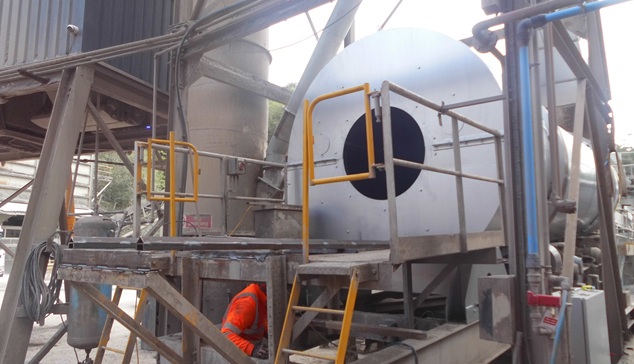
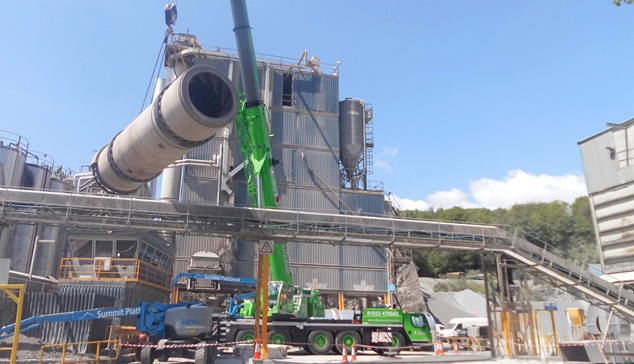
Based on a conservative 10% carbon saving, the transition to LPG at these sites is expected to reduce our Group Scope 1 emissions by around 1,000 tCO₂e. Performance at the upgraded plants will be monitored over the next 12 months to validate the carbon savings achieved in practice.
Importantly, these upgrades also provide resilience for the future. The infrastructure installed for LPG is compatible with both Bio-Propane and renewable dimethyl ether (rDME), both being next‑generation sustainable fuel produced from renewable feedstocks. Utilising these fuel sources have the potential to reduce greenhouse gas emissions by up to 85%, positioning Breedon to adopt even lower‑carbon solutions as they become commercially viable.