Select your area
Select your area
Select your area
Select your area
Select your area
Select your area


Breedon has committed to science‑based carbon reduction targets and achieving net zero by 2050. Delivering this ambition requires progress across several core decarbonisation levers outlined in our Climate Transition Plan and Annual Report. A key lever is the transition away from fossil fuels towards lower‑carbon alternatives.
For our cement operations, this involves replacing traditional kiln fuels—such as coal—with alternative options including solid recovered fuels, liquid wastes, and end‑of‑life tyres. While Kinnegad Cement Works has consistently achieved high levels of alternative fuel substitution, the long‑term objective remains to reach a 100% alternative fuel rate.
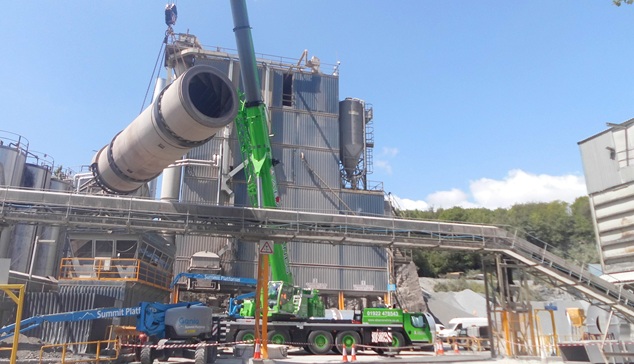
In 2025, Breedon Cement Kinnegad made significant advancements in expanding its alternative fuel capabilities. This included the installation and commissioning of new systems designed to handle animal waste‑derived meat and bone meal (MBM), kiln‑grade solid recovered fuel (SRF), and crumbed rubber storage and dosing infrastructure.
A major focus throughout 2025 was the development of a long‑term domestic solution for MBM, reducing reliance on exporting this material. The €5 million MBM project was successfully delivered on schedule and within budget in Q4 2025, marking an important milestone in supporting both operational efficiency and national waste‑management needs.
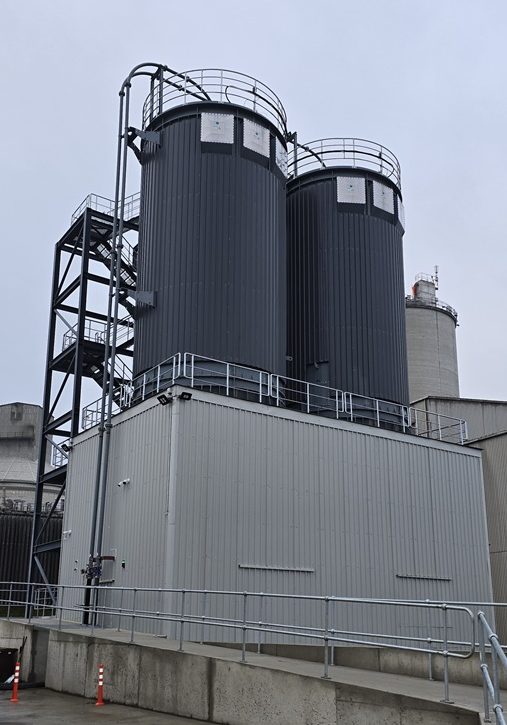
Co‑processing alternative fuels within the cement kiln enables complete recovery of both the material’s mineral content (ash) and calorific value. This reduces dependence on virgin raw materials and imported fossil fuels, while contributing to a more circular and resource‑efficient economy.
The progress achieved in 2025 has increased Kinnegad’s alternative fuel usage year‑on‑year to 82%. This means we are now replacing approximately 63,000 tonnes of imported coal, representing a 42% reduction in kiln fuel scope 1 carbon emissions by using alternative fuels. These improvements represent a meaningful step towards Breedon’s net‑zero pathway and reinforce Kinnegad’s position as a leader in low‑carbon cement manufacturing.