Select your area
Select your area

Select your area
Select your area
Select your area
Select your area

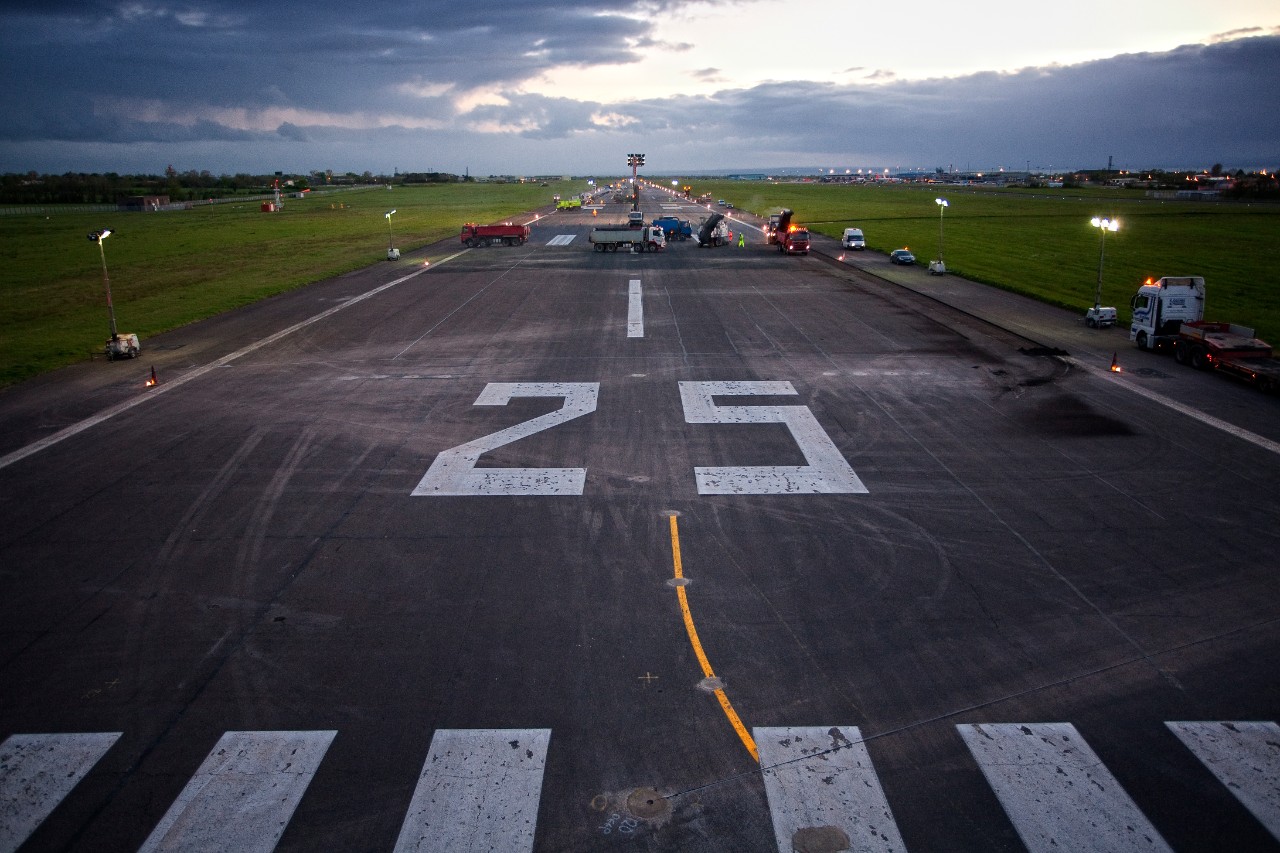
Islay Airport provides air connectivity with the Scottish mainland for the local community as well as the island’s tourism, agriculture and whisky production industries. Operated by Highland and Islands Airport Limited (HIAL), it provides twice-daily passenger services to Glasgow, as well as being used by the Air Ambulance service and Coastguard, as well as for light aircraft operations.
In 2022, HIAL went out to tender to deliver major rehabilitation works to Islay’s two runways, it’s 1,554 metre main runway and the 635-metre cross runway, as well as an upgrade to the airfield ground lighting.
Through the public sector procurement process, Breedon were appointed as Principal Contractor for the scheme, delivering the full package of works including the supply of raw materials, on-site asphalt batching operations, and the installation of the new runway surfaces.
.png)
To meet current and future airfield requirements, and ensure the airport could operate safely and efficiently for years to come, the project focused on adapting the runway layout and upgrading the surface to withstand the high impact of aircraft landings.
The work involved reducing the operational width of the main runway from 46 metres to 30 metres to reduce long-term maintenance, installing a new surface course on both runways, and reconfiguring the airfield ground lighting to the new width.
Although the scope appeared straightforward, the island location posed significant challenges. With no asphalt plant on Islay and local aggregates unable to meet the required technical specification, all plant, equipment and materials needed to be transported to the island.
The project also had to be delivered between June and September. While this period offered more favourable weather and longer daylight hours, it coincided with the island’s busiest tourist months. This placed pressure on the limited ferry service, making the movement of materials and equipment difficult, and accommodation across the island was already at capacity, restricting availability for project workers.
The works also had to be delivered while keeping the airport fully operational, meaning the programme needed to accommodate scheduled flights and allow for immediate pauses to safely clear the runway for unscheduled Air Ambulance and Coastguard movements.
All activity had to be coordinated carefully to minimise disruption to the local community and the industries that rely on the airport.
To overcome the challenge of Islay having no local asphalt production, we sourced and mobilised a fully selfcontained mobile asphalt plant for the project. The Parker Roadstar 1500 was selected as the most efficient and reliable option, capable of meeting both the material specification and the tight programme. To avoid placing additional strain on the island’s limited ferry service, the plant was transported using specially commissioned barges, minimising disruption to local services while ensuring it was operational in time to meet project deadlines.
The project required the on-site batching of 7,500 tonnes of Hot Rolled Asphalt, which was then grooved to achieve the friction characteristics and skid resistance required for aircraft landings. Our technical team developed a bespoke mix using a careful blend of coarse and fine aggregates to ensure consistent, high-quality production batch after batch. The aggregates were sourced from our Furnace Quarry near Inverary, and the asphalt sand was supplied from Ardersier near Inverness.
Through detailed logistics planning, the use of local hauliers, and coordinated material handling on the island, all materials were delivered in sequence to support uninterrupted asphalt production throughout the works.
The asphalt was laid by our dedicated Surfacing Solutions team, whose extensive airfield experience ensured the works were delivered to the highest standard. A gang of experienced operatives laid 400 tonnes of material per five-hour shift, carrying out all operations with precision to meet the stringent requirements of a live airfield environment.
Maintaining airport operations was a critical part of the project. Our Surfacing Solutions and On-site Batching teams worked around the twice-daily scheduled flights and responded to 22 unplanned stoppages to accommodate emergency Air Ambulance and Coastguard operations. A well-planned procedure allowed the team to make the airfield safe, clear the runway quickly, and return to works efficiently once aircraft movements were complete.
To deliver the airfield lighting modifications, we partnered with VolkerFitzpatrick’s Specialist Aviation Services team. Our long-standing relationship and their expertise enabled the lighting upgrades to be completed seamlessly.
Throughout the project we worked closely with the airport and the island community to minimise disruption. We supported the local economy through plant and equipment hire and secured block accommodation bookings for our workforce where possible.
Balancing operational, logistical and community considerations was central to our approach, ensuring we delivered improvements to this vital island asset without disrupting the people and industries it serves.
Hot Rolled Asphalt delivered
laid on average per 5-hour working window between flights