Select your area
Select your area
Select your area
Select your area
Select your area
Select your area

Ardersier Port, near Inverness, is the UK’s largest brownfield port and is being transformed into Scotland’s leading wind deployment hub, supporting national net zero ambitions and the growing demands of the sector.
To support the transformation of the port, 659 linear metres of new quay wall needed to be constructed, including a deep anchor wall system to provide long-term stability.
Led by Haventus, with Bauer Construction as principal contractor, the project required 52,000m³ of ready-mix concrete supplied by Breedon through an on-site batching solution to construct the new quay walls.
The walls needed to extend to depths of up to 42 metres for the outer walls and 27 metres for the anchor walls. The anchor walls comprised of a steel reinforced framework that required a concrete infill to create a robust structure capable of supporting the significant loads.
Due to the scale and depth of the quay walls, a large volume of highperformance concrete was required. This needed to be placed at depth using a tremie pipe to ensure controlled placement and prevent segregation.
To support this placement method, a highly workable concrete mix was required that was able to flow through the tremie pipe while retaining its structural integrity. The concrete also needed to withstand aggressive marine conditions, including exposure to high chloride levels.
To lower the overall carbon footprint of the project, Haventus specified the use of dredged sand recovered on site for inclusion in the concrete mix. This reduced reliance on primary (virgin) materials and minimised transportrelated emissions.
Finally, the 24-week programme required a continuous and dependable supply of concrete. Production and logistics needed to be carefully managed, with on-site batching essential to meet the required material volumes and ensure consistent quality throughout the works.
To achieve these requirements, we developed a bespoke concrete mix that met the relevant marine exposure classifications, protected embedded steelwork, and achieved the workability needed for tremie pipe placement.
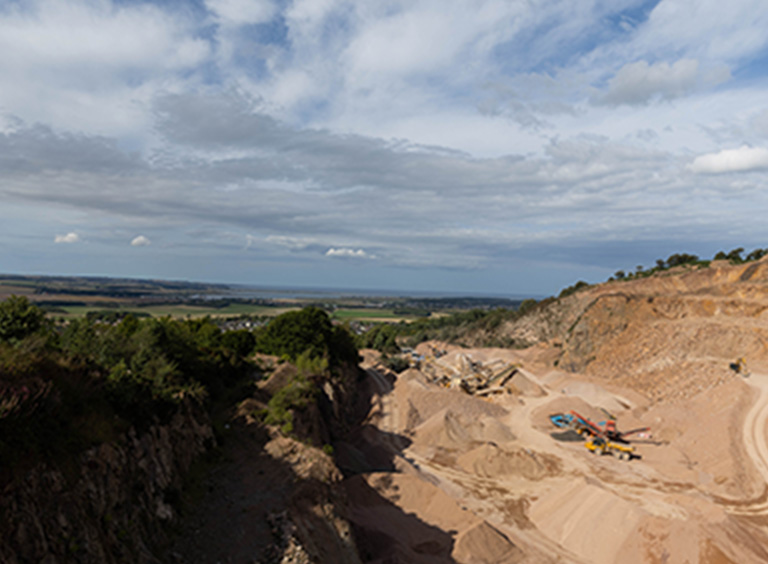
The mix design incorporated 26,000 tonnes of dredged sand recovered directly from the site. Due to the fine nature of the sand it was blended with crushed rock fines to produce a compliant fine aggregate grading, alongside coarse aggregates, with all materials sourced from our Daviot quarry. Pulverised Fuel Ash (PFA) was also included in the mix to support compliance with the specified exposure classes while further reducing the overall carbon footprint.
Developing the mix presented several technical challenges, which were addressed through an extensive trial programme. Laboratory testing, batching plant trials, and on-site placement trials were all undertaken, with each stage validated before construction pours began. This rigorous process ensured the mix met the required performance, durability, and workability criteria.
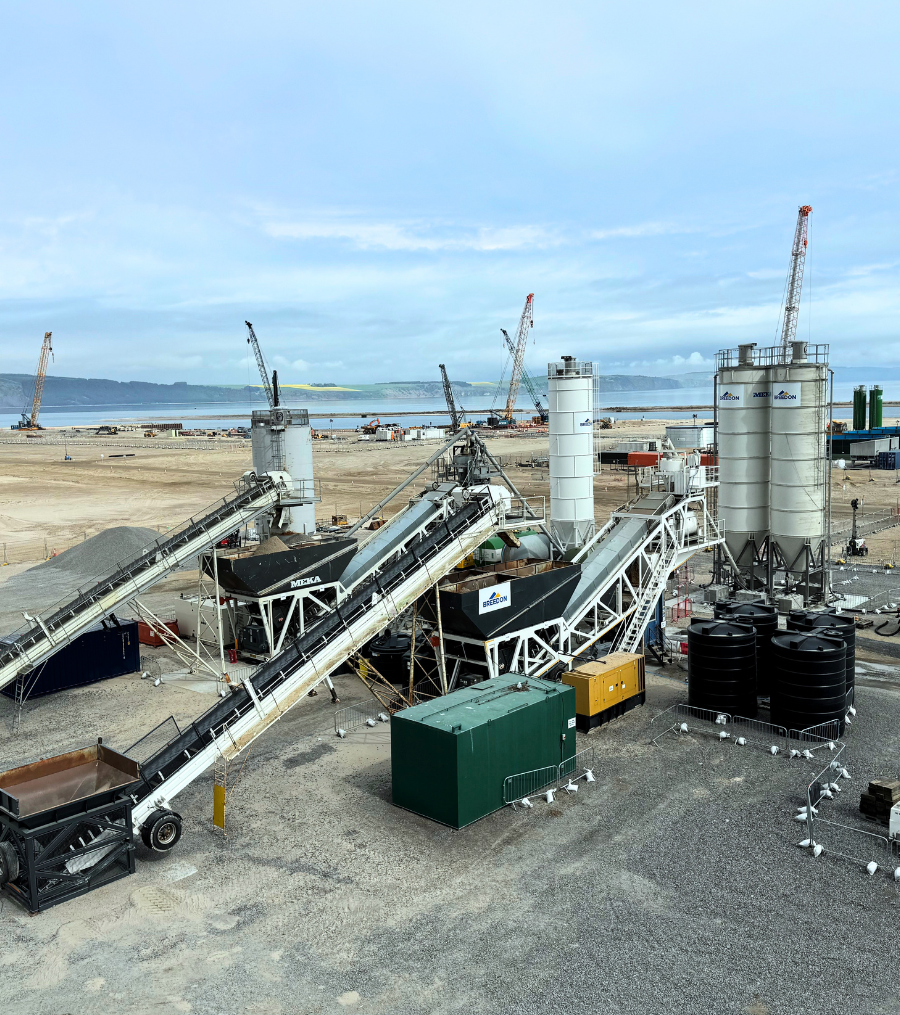
To support delivery, we mobilised two dedicated on-site batching plants providing a fully integrated back-up facility, while also enabling additional production capacity to meet high daily demand. Raw material stocking areas were established on site to ensure ready availability, supporting outputs of up to 600m³ of concrete per day, with an average daily production of around 400m³. As a further contingency, our high-capacity Inverness ready-mix concrete plant was fully stocked and ready to support if required, although this was not needed during the project.
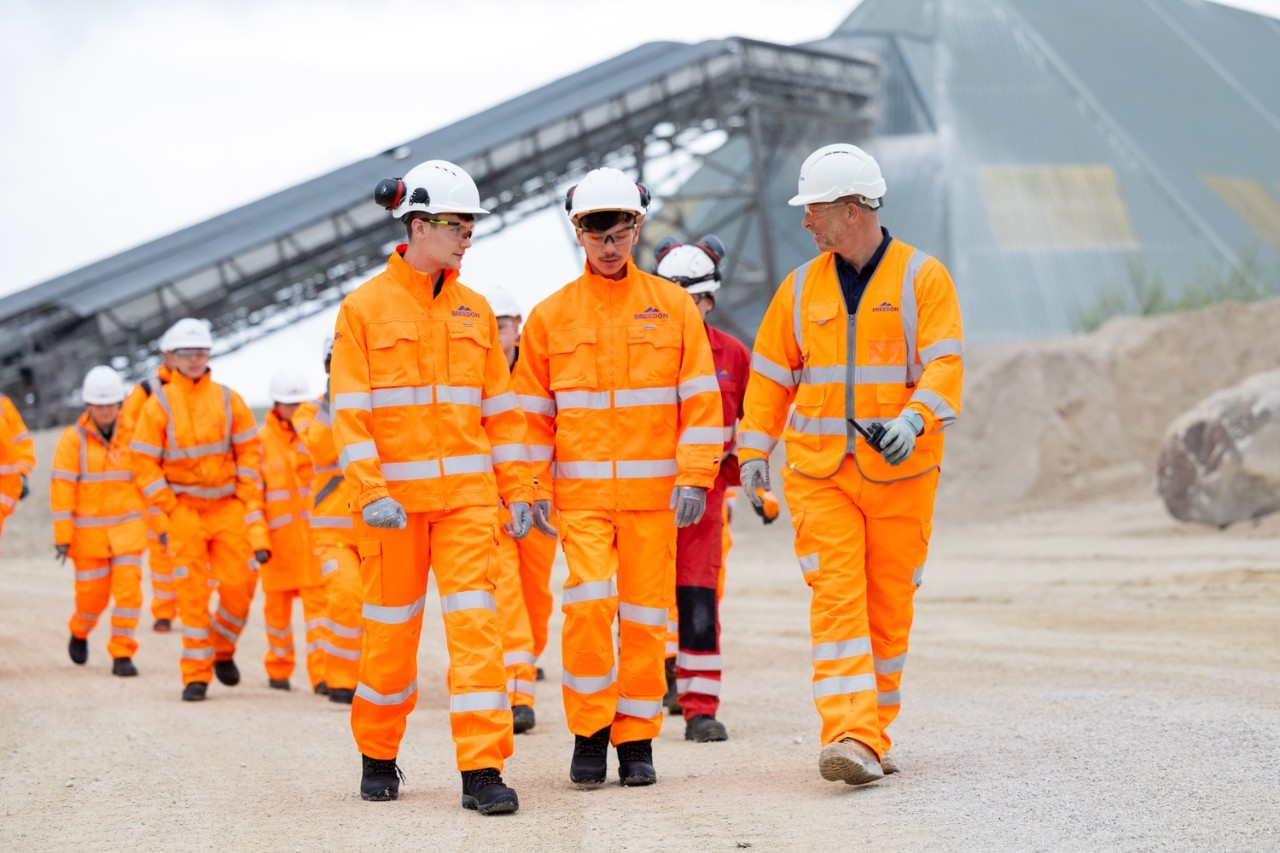
A dedicated concrete technician was present throughout, carrying out pre-pour inspections and continuous quality monitoring to ensure the concrete consistently met the specified requirements.
The project was successfully delivered within the programme timeline, with the dredged sand repurposed into the concrete mix demonstrating technical excellence and a strong commitment to support sustainability and a circular economy.
of new quay wall created
dredged sand incorporated into the concrete mix
of concrete poured per day